
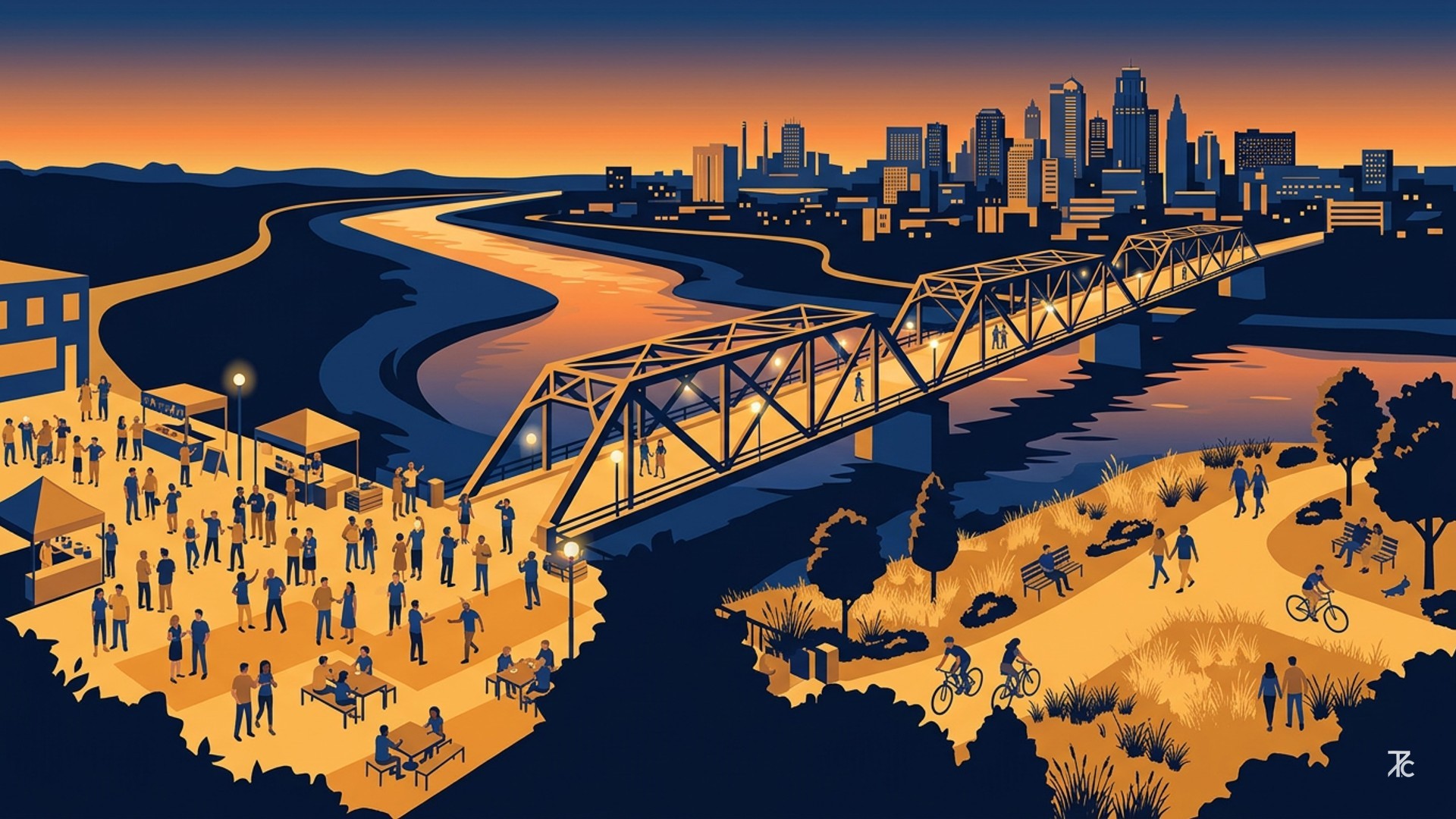
After a successful summer as a global gathering spot, the bridge's next phase of development aims to create a permanent economic and cultural anchor for Kansas City.
The Dress Rehearsal Is Over
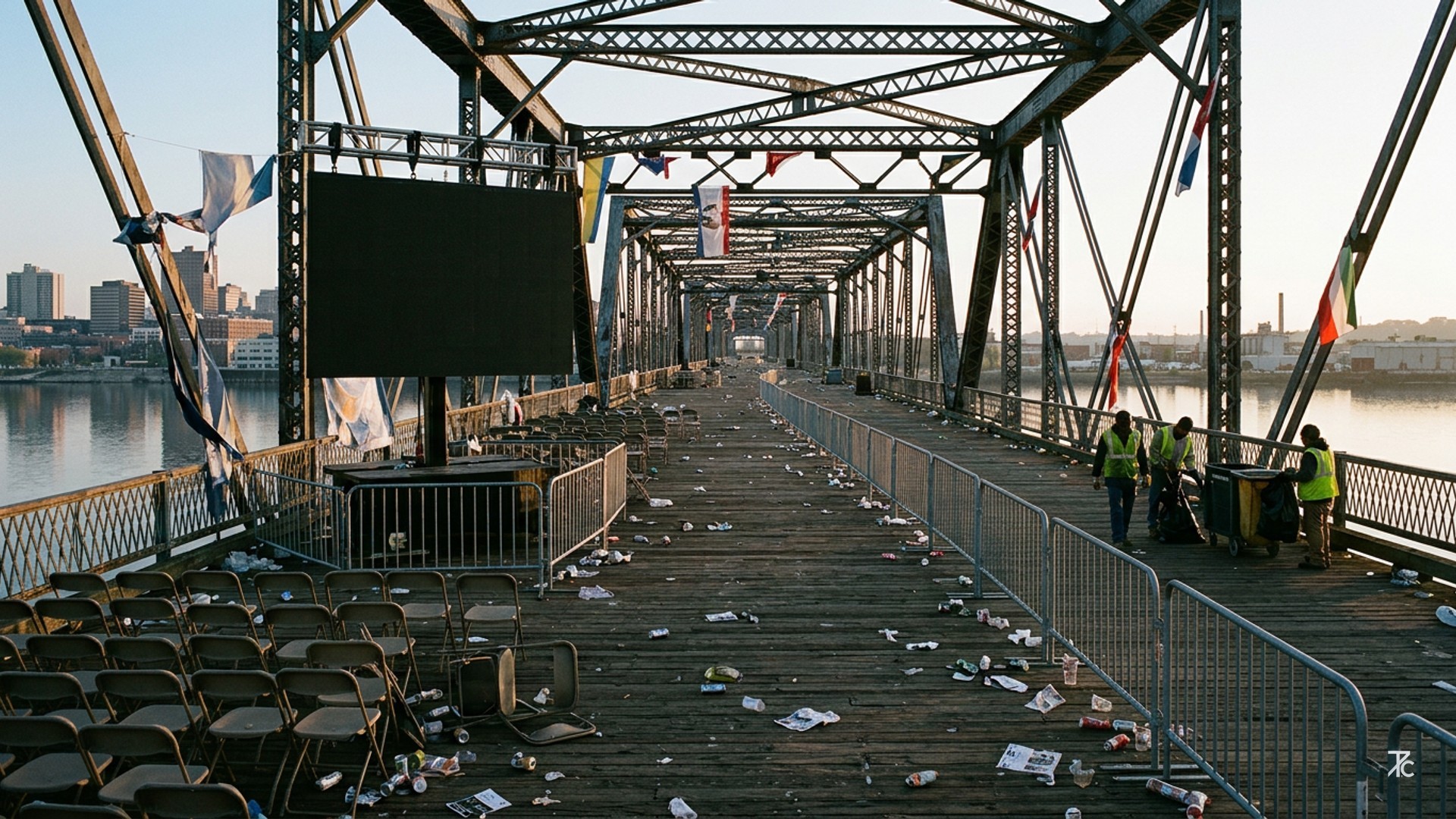
The global crowds have departed, but the Rock Island Bridge's biggest moment is still ahead. Its wildly successful run as a central gathering place for World Cup watch parties this summer served as a high-stakes 'dress rehearsal' for its permanent role in Kansas City's future. According to a KCUR report, the bridge hosted massive crowds, proving its capacity as a major public venue.
This trial by fire was a critical test of the city's infrastructure and planning. Much like Los Angeles is using major soccer tournaments as a dry run for the 2028 Olympics, Kansas City gained invaluable operational data from the bridge events, as detailed in a Megadata analysis of large-scale event logistics. The experience managing pedestrian flow, security, and transit for a global audience has provided a clear blueprint for the bridge's next act.

Building an Economic Anchor on the Kaw
With the proof-of-concept phase complete, developers are now focused on the bridge's evolution into a permanent fixture of Kansas City's economic and cultural landscape. The plan involves transforming the industrial relic into a year-round destination, a strategy that mirrors other successful urban renewal projects. For instance, the redevelopment of a 1.5 million-square-foot abandoned mill near Chattanooga, detailed in a Cauble Group podcast, highlights how investing in core infrastructure and phased development can turn a derelict property into a thriving community hub.
This long-term vision is critical for attracting further investment. As an analysis from Theplugg on trade stability notes, businesses crave predictability. By establishing the bridge as a permanent, reliable destination, the project provides an anchor for surrounding riverfront development in both Kansas City, Kansas, and Kansas City, Missouri. This stability encourages restaurants, retail, and residential projects to invest in the area, creating a virtuous cycle of growth.

Rock Island Bridge: Event Hub vs. Permanent Venue
| Feature | World Cup Hub (Summer 2026) | Permanent Venue (Future) |
|---|---|---|
| Primary Use | Temporary watch parties, event space | Year-round public park, entertainment district |
| Access | Ticketed/event-specific entry | Open public access with dedicated commercial zones |
| Economic Impact | Short-term event revenue and tourism | Sustained property value uplift, permanent jobs, new business creation |
| Infrastructure | Temporary stages, screens, and vendor stalls | Permanent structures, landscaping, dining, and performance venues |
What's Next: From Blueprint to Reality
The immediate next steps for the Rock Island Bridge involve securing the final tranches of financing and moving forward with permanent construction. This phase will see the installation of long-term amenities, landscaping, and commercial structures designed to make the bridge a self-sustaining destination.
As the physical space evolves, so will its programming. The bridge is poised to become a premier location for a wide array of community events, moving beyond soccer to include concerts, festivals, and even astronomical viewings. For example, the Perseid meteor shower, which peaks overnight tonight and into Thursday morning, is exactly the kind of public spectacle the finished bridge will be equipped to host, as noted in a KUT Austin report on ideal viewing conditions. As a new jewel of the city's public realm, the bridge's calendar will become a key part of KC's cultural rhythm.

Q: What was the Rock Island Bridge used for this summer?
A: The Rock Island Bridge was a primary public venue for Kansas City's World Cup 2026 festivities, hosting large-scale watch parties and events that drew global crowds.
Q: What is the long-term vision for the bridge?
A: The long-term vision is to transform the bridge from a temporary event space into a permanent, year-round public park and entertainment district, featuring permanent structures, landscaping, and commercial vendors to anchor riverfront development.
Q: How will the project be funded?
A: The project utilizes a mix of public and private funding. Its successful summer demonstrated its viability, which is expected to attract further private investment for the next phases of permanent construction, similar to other large-scale urban redevelopment projects.
Q: How does this project benefit Kansas City's economy?
A: It acts as an economic catalyst by creating a new destination for tourists and residents, which drives spending. More importantly, it provides a stable anchor for long-term real estate and commercial development along the riverfront, increasing property values and creating permanent jobs.