

Federal Crackdown Begins in Kansas City
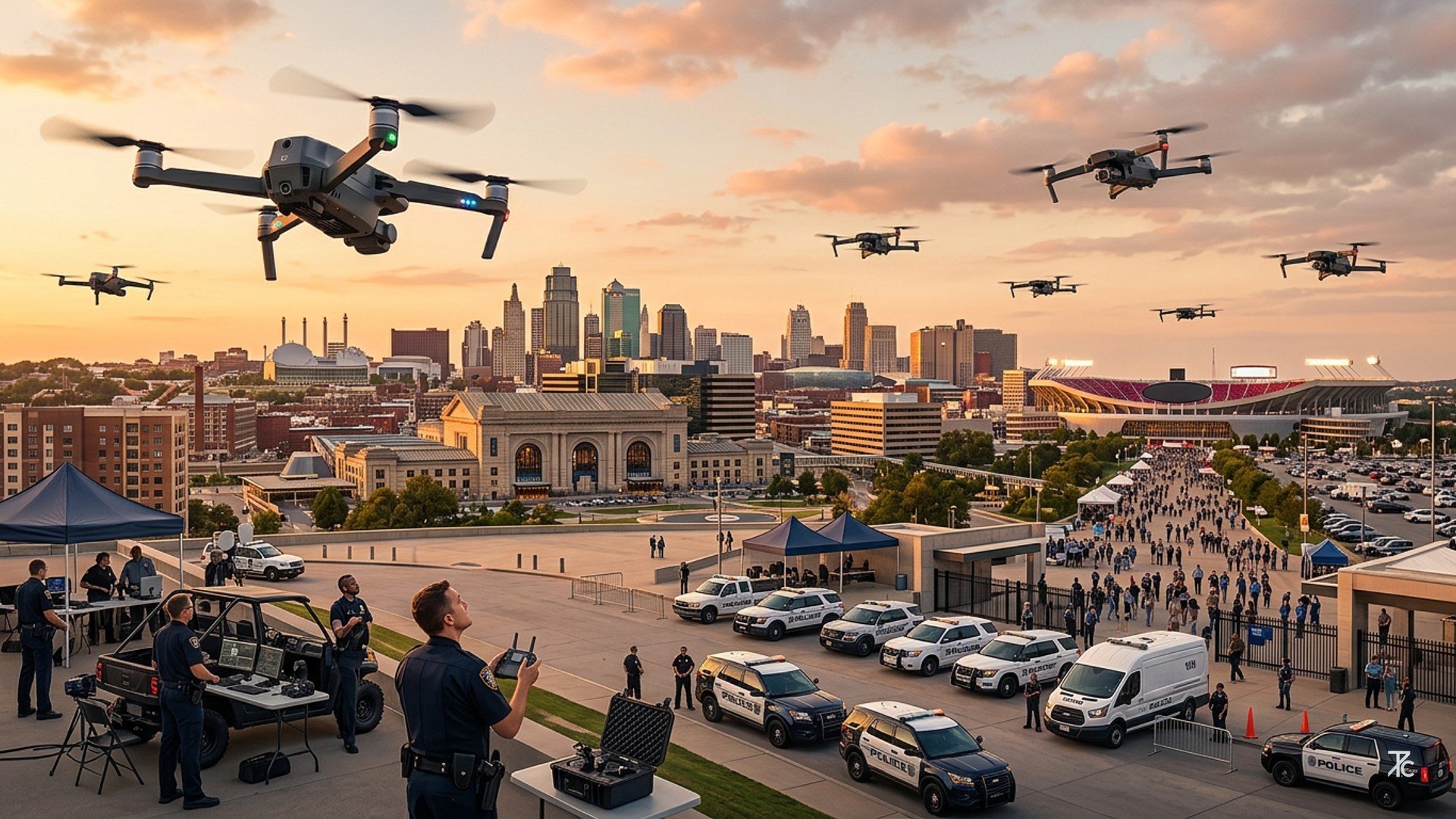
As Kansas City welcomes the world for FIFA World Cup 2026, a high-stakes security operation is unfolding in the skies above. Federal agents have begun actively seizing illegally operated drones, enforcing strict temporary flight restrictions (TFRs) around stadiums and fan zones. The U.S. Secret Service has already recorded and seized more than a dozen drones that breached the no-fly zone at the official Fan Fest. Operators are facing both criminal and civil fines.
The enforcement is part of a massive, multi-agency security plan that has been years in the making. Both the Fan Fest and Arrowhead Stadium have received a SEAR 2 designation (Special Event Assessment Rating), unlocking federal assets to support local law enforcement. Brandon Bridgeforth, special agent in charge of the U.S. Secret Service in Kansas City, issued a stark warning to drone pilots: “Don’t fly your drones. Don’t push the limits. You’ll be caught, you’ll be arrested, you’ll be prosecuted.”

A 'Zero-Tolerance' Policy in the Air
The aggressive enforcement in Kansas City reflects a nationwide "zero-tolerance" policy for drones near all World Cup venues. Devin Kowalski, an FBI assistant director, stated the agency plans to treat all unauthorized drones “like they could be a real-deal threat.” This heightened posture is a response to the evolving nature of drone technology, which can range from a simple nuisance to a vehicle for a dangerous payload.
To counter this, federal agencies have deployed a sophisticated network of sensors, cameras, and radar systems to detect and track any drone entering restricted airspace. This technology allows law enforcement to electronically take control of a rogue drone and land it safely. The operation in Kansas City involves a coalition of federal partners, including the FBI, ATF, Homeland Security Investigations, and the FAA, all coordinated to protect the airspace.

Kansas City's High-Tech Defense System
Kansas City's own law enforcement has significantly upgraded its capabilities ahead of the tournament. The Kansas City Police Department has expanded its drone security program, bolstered by substantial federal funding. Missouri received approximately $14 million for drone security, with KCPD getting about $11.8 million from a Department of Homeland Security grant specifically for a counter-drone system.
This investment has funded a new radar-based system designed to mitigate drones flying over controlled airspace. This local capability complements the federal effort and is part of KCPD's broader strategy, which includes the "drone as first responder" program launched in 2025. While officials emphasize that strict policies are in place to govern drone use and protect privacy, the expanded surveillance footprint has drawn concern from local activists.
| Venue | Restriction Radius | Restriction Altitude |
|---|---|---|
| FIFA Fan Fest | 1 mile | 1,000 feet |
| Arrowhead Stadium | 3 miles | 3,000 feet |
What's Next: Continued Enforcement and Evolving Debate
The security posture will remain at this heightened level for the duration of the World Cup. Fans and residents can expect a strong, visible security presence on the ground and a silent, high-tech one in the air. The recent arrest of a drone operator in Atlanta who was also found to be in the country illegally underscores the seriousness of the enforcement actions, with the FBI's Atlanta office seizing 21 drones in that city alone.
For Kansas City, the legacy of this event will include not only memories of the matches but also a significantly enhanced security infrastructure. The KCPD's expanded drone program will continue to operate post-tournament, prompting an ongoing public conversation about the balance between public safety and privacy. As the technology and its applications evolve, so too will the policies and debates surrounding its use in the city.

What are the no-fly zones in Kansas City for the World Cup?
There is a Temporary Flight Restriction (TFR) extending three miles in radius and up to 3,000 feet in altitude around Arrowhead Stadium. A separate TFR is in place over the FIFA Fan Fest, extending one mile in radius and 1,000 feet in altitude.
What happens if I fly a drone in a restricted zone?
You risk having your drone seized by federal agents. Violators face significant civil and criminal penalties, including fines that can reach up to $100,000 and potential jail time. You will be caught, arrested, and prosecuted.
Are law enforcement agencies also using drones?
Yes. The Kansas City Police Department has a "drone as first responder" program and is using drones for event monitoring. Federal agencies like the FBI also use their own drones to help monitor and secure tournament sites.
Why is drone security so strict for the World Cup?
Drones pose a unique challenge because they are readily available and can carry anything from a camera to a more dangerous payload. Law enforcement treats every unauthorized drone as a potential threat to public safety for the thousands of fans, athletes, and staff at the events.
Sources
- Federal agents seize drones ahead of World Cup match in Kansas City 2026-06-15
- At World Cup stadiums, there will be zero tolerance for drones because of the threat they pose | FOX31 Denver 2026-02-27
- KCPD expands drone security program ahead of World Cup | Kansas City Star 2026-06-17
- FBI Arrests Illegal Immigrant After Flying Drone Scare Near World Cup Stadium 2026-06-17
- FBI warns drone operators to stay away from World Cup matches 2026-06-05
- Fans and visitors can expect strong security presence at Arrowhead Stadium for FanFest 2026-06-16
- Top administration official highlights Kansas City security as World Cup begins 2026-06-16
- Drone News: TFR Over El Paso, DJI Former Sales VP Detained, KCP C-UAS Authority, Pilot Faces Charges 2026-06-16